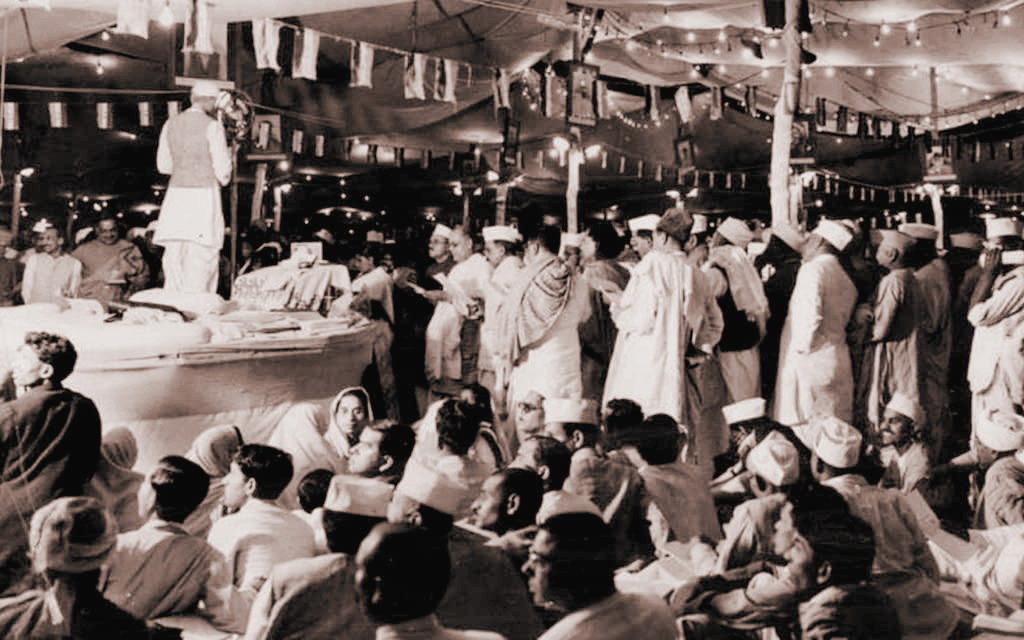
The Lahore session proved a momentous one. At Gandhi’s instance, the All-India Congress Committee had elected Jawaharlal Nehru as its president. The Congress, instilled with new hope and energy, needed a young man at the helm. The forty-year-old Jawaharlal whom Gandhi described “pure as crystal . . . . truthful beyond suspicion . . . a knight sons peur et sons reproche” was to be in fullness of time the Mahatma’s political heir. There was a bond of deep affection between the two men in spite of the twenty years and widely differing intellectual backgrounds which separated them.
The year of grace which the Calcutta Congress had granted had drawn to a close. Dominion Status had not been conceded; the offer of the minimum national demand embodied in the Nehru Report lapsed. At midnight on December 31, 1929, as the New Year dawned, the Indian National Congress unfurled the flag of independence on the bank of the Ravi. The Congress called upon its members in central and provincial legislatures to resign their seats and authorized the launching of a civil disobedience campaign.