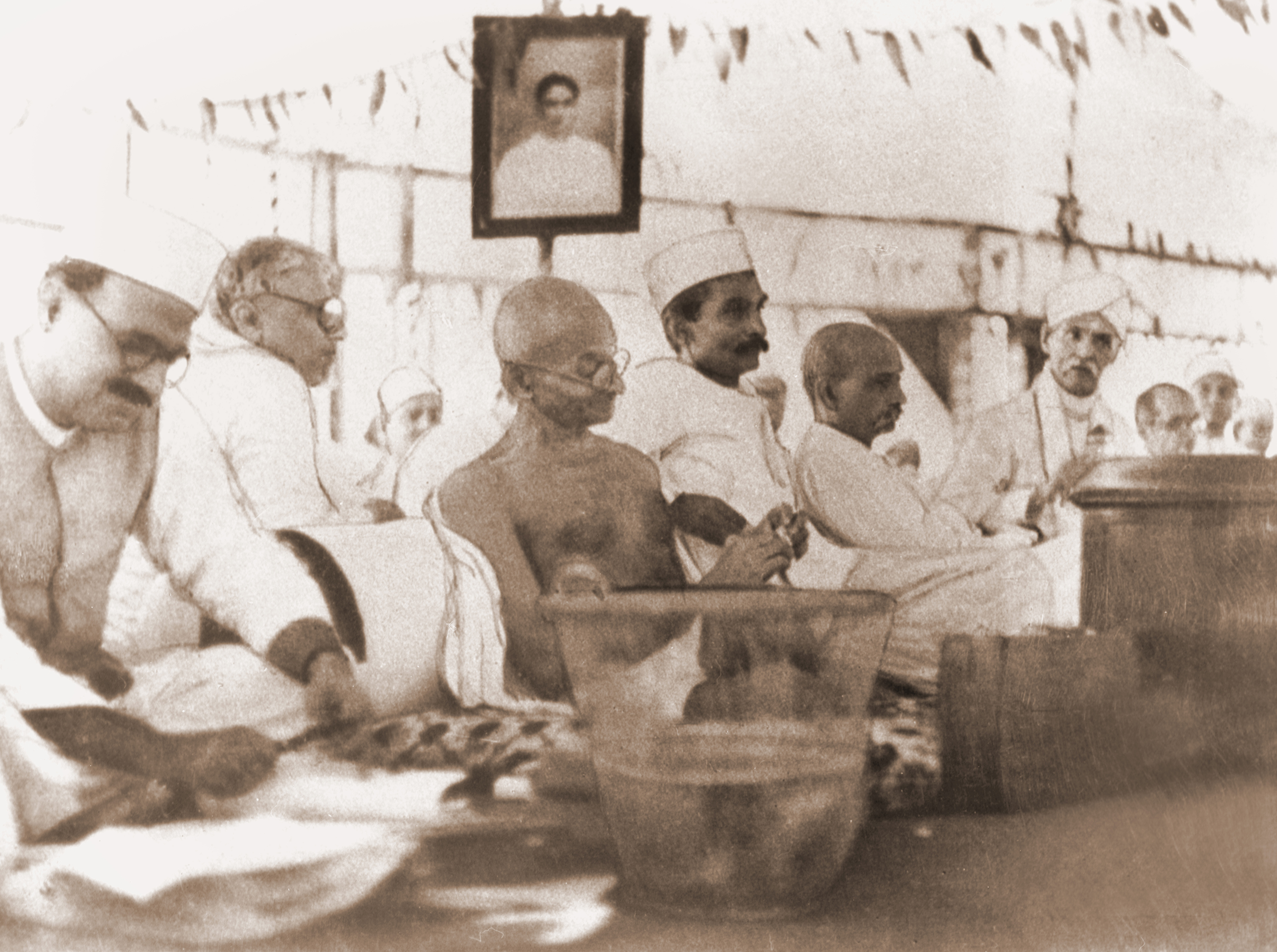
Indian politics were in the doldrums during the years 1934-35, but as the time came for elections to the provincial legislatures in accordance with the Act of 1935, political excitement rose to a high pitch. From the point of view of the Indian National Congress, the new Constitution was inadequate and unsatisfactory. The scheme of the Indian Federation gave a sizeable representation to the princely states, and since their representative, because of the absence of elective bodies, were likely to be the nominee, of the absence of princes, (who in turn were dependent for their very existence on the British Government) Indian nationalists viewed the new Constitution with a feeling bordering on dismay. In the provinces a wider field was permitted to Ministers responsible to elected legislatures, but even here the Governors had been invested with over-riding and preventive authority.
Because of these limitations, there was a large and vocal section in the Congress led by Jawaharlal Nehru which did not want to have anything to do with the new Constitution. Nevertheless, the Congress decided to contest the elections, which were held early in 1937. It acquitted itself very well indeed, and was in a position to form ministries in six out of eleven provinces. A section of the Congress even favoured acceptance of office and its hands were strengthened by the moral support it received from Gandhi. The Mahatma felt that with all its deficiencies, the new Constitution could promote the programme of village uplift. He saw no reason why Congress ministries in the provinces could not encourage village industries, introduce prohibition, reduce the burden on the peasantry, promote the use of hand-spun cloth, extend education and combat untouchability.
The acceptance of office by the Congress party was facilitated by a statement issued by the Viceroy, Lord Linlithgow, which did not change the legal position or the powers of the Governors, but breathed a spirit of conciliation to which the Congress responded by deciding to form ministries.
For a political party which had remained so long in opposition, to get into the seat of power was a novel, and even a hazardous experience. The left wing in the Congress, which opposed formation of ministries, had in fact stressed the possibilities of internal dissensions and scramble for loaves and fishes among Congress-men. Gandhi found himself inundated with requests for jobs and ministerships; he expressed his surprise and distress at this trend, because to him the legislatures and ministerships were only one and a limited medium of serving the country. He felt that for the majority of Congressmen the work lay in the villages in the constructive fields of social and economic reform. The caucus system, the struggle for power and pressure politics, which are accepted as part of political democracy, were repellant to Gandhi. As an ‘experienced servant and general’, he deprecated the struggle for “the spoils of office”, and the dissipation of energy in factional rivalries.
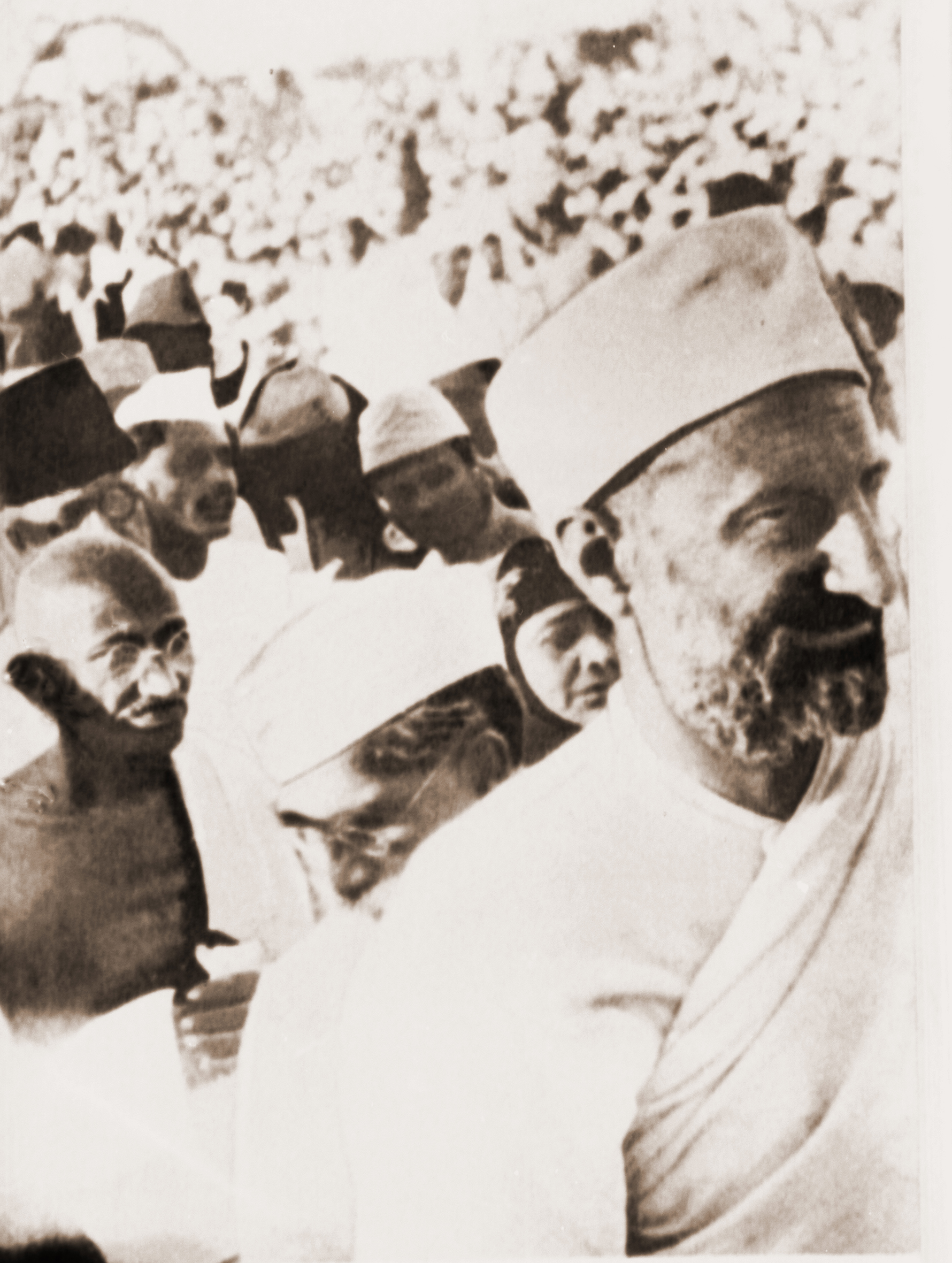
During these years Gandhi was also much distressed by the rise in communal tension. To some extent this increased tension was attributable to the elections to the legislatures. The religions minorities were allowed to elect their representatives only from a purely communal electorate, from which adherents of all other religions were excluded. It was only natural that Muslim candidates should raise religious issues which could make the widest and easiest appeal to a largely illiterate electorate. It so happened that from 1937 onwards it suited the All India Muslim League, under the leadership of M.A. Jinnah, to whip up religious feeling. The League had done badly in the elections, but it sought to retrieve its position by launching a tirade against the Congress and Gandhi. Gandhi was alleged to be ‘Enemy Number One’ of the Muslim community and the British Governors were accused of conniving at a systematic oppression of the Muslim minority by the Hindus. Vague and exaggerated accusations were made about “atrocities” on the Muslims.
The Muslim League’s antagonism to the Congress acquired a progressively sharper edge. Jinnah began even to question the suitability of a democratic system of government for India, and in 1940 came out with the theory that Hindus and Muslims were two separate nations and the Muslim nation needed a ‘homeland’ of its own in the north-west and north-east of the sub-continent.
Gandhi’s reaction to the two-nation theory and the demand for Pakistan was one of bewilderment, almost of incredulity. Was it the function of religion to separate men or to unite them? He described the two-nation theory as an “untruth”; in his dictionary there was no stronger word. He discussed the attributes of nationality. A change of religion did not change nationality; the religious divisions did not coincide with cultural differences. A Bengali Muslim, he wrote, ‘speaks the same tongue that a Bengali Hindu does, eats the same food, has the same amusements as his Hindu neighbour. They dress alike. His (Jinnah’s) name could be that of any Hindu. When I first met him, I did not know he was a Muslim.”
To divide India was to undo the centuries of work done by Hindus and Muslims, Gandhi’s soul rebelled against the idea that Hinduism and Islam represented antagonistic cultures and doctrines, and that eighty million of Muslims had really nothing in common with their Hindu neighbours. And even if there were religious and cultural differences, what clash of interests could there be on such matters as revenue, industry, sanitation or justice? The differences could only be in religious usage and observances with which a secular state should have no concern.
The separatist ideology was to receive a fillip from the outbreak of the Second World War, which imposed new strains on the Indian sub-continent. Briefed by Nehru in international affairs, Gandhi sympathized with the victims of Fascist and Nazi aggression, Gandhi’s own life had been one long struggle against the forces of violence. For more than thirty years he had been experimenting with a technique—Satyagraha—which, while eschewing violence, was designed to resolve conflicts.