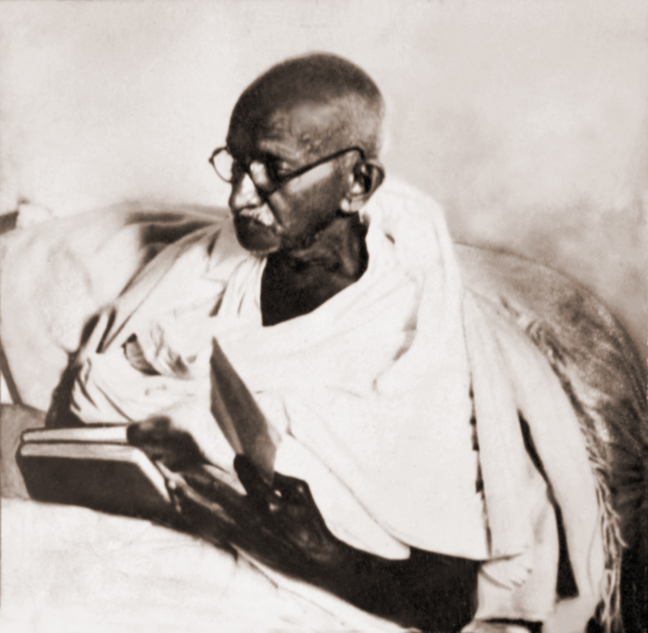
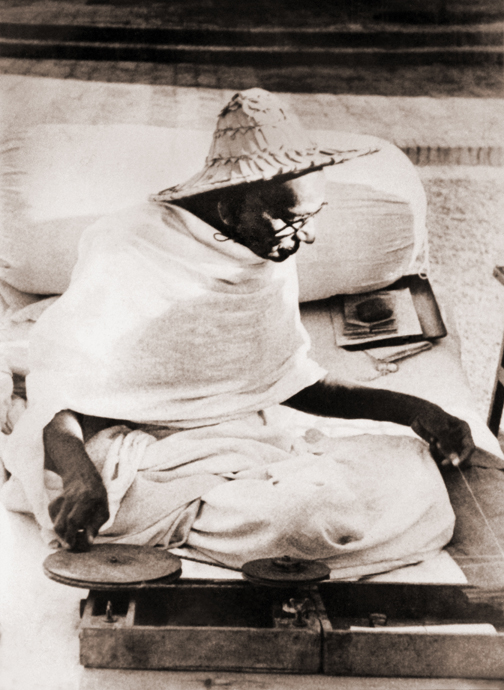
The year 1947 dawned with the darkest possible prospects on the political horizon. To check the drift to chaos, Clement Attlee, the British Premier, came to the conclusion that what was needed was a new policy and a new Viceroy to carry it out. He announced in the House of Commons on February 20, 1947 that the British Government definitely intended to quit India by June 1948, and if by that date the Indian parties did not agree on an all-India constitution, power would be transferred to “some form of Central Government in British India or in some areas to the existing Provincial Governments.” Simultaneously it was announced that Lord Mountbatten would succeed Lord Wavell as Viceroy.
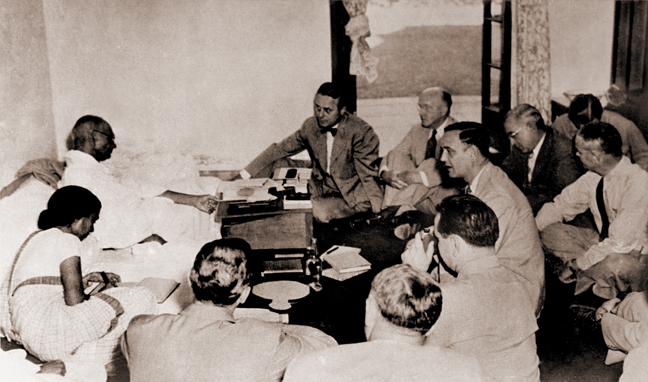
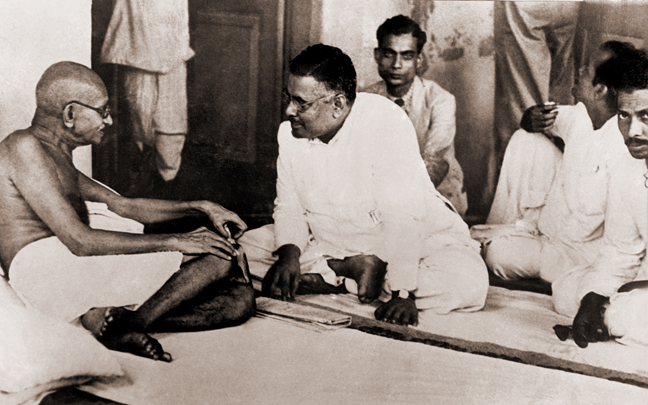
The British withdrawal had been decided and dated by the February 20th statement. Lord Mountbatten arrived in India in March and one of his first acts as Viceroy was to invite Gandhi for a discussion. The Mahatma interrupted his peace mission in Bihar and travelled to New Delhi. During the next few weeks it became evident that a solution of the political deadlock would besought through the division of India. The Muslim League led by Jinnah was adamant, but there was also a re-orientation of the Congress attitude towards partition. Hitherto the Congress had insisted that partition should, if at all, follow and not precede political liberation, that there could be “no divorce before marriage”. But the few months of stormy courtship in the Interim Government had cured Nehru, Patel and other Congress leaders of the desire for a closer union with the Muslim League. In the spring of 1947, the choice seemed to them to be between anarchy and Partition; they resigned themselves to the latter in order to salvage three-fourths of India from the chaos which threatened the whole.
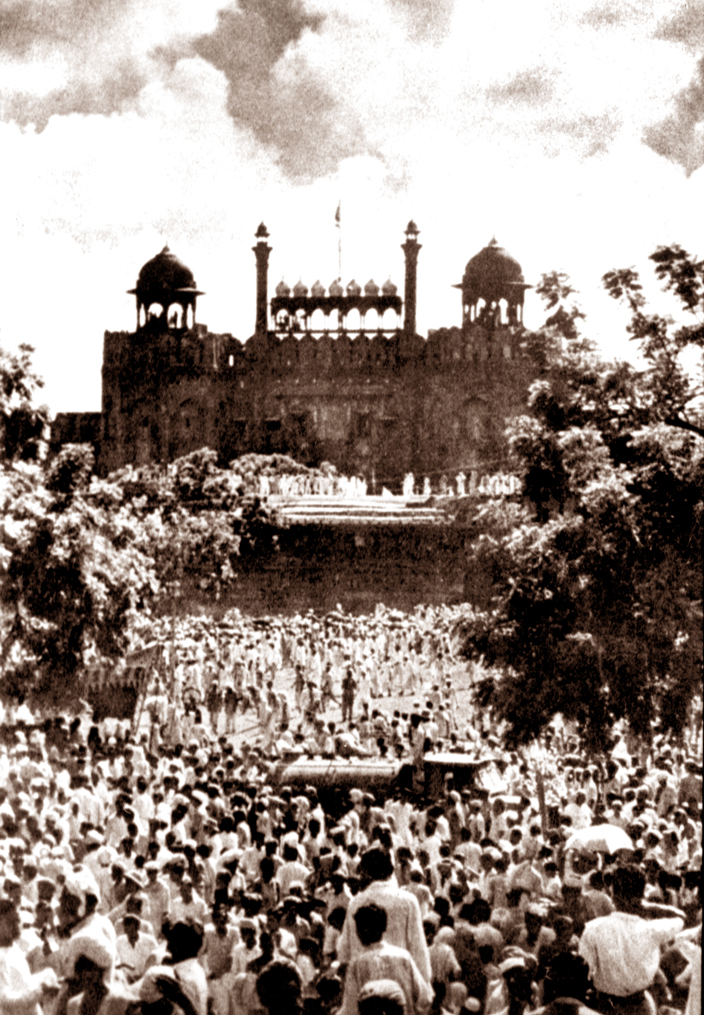
The stage was thus set for the June 3 Plan under which power was to be transferred by the British to two successor states on August 15, 1947. What Gandhi had feared had come to pass. India was to be divided, but partition was not being imposed; it had been accepted by Nehru, Patel and a majority of the Congress leaders. Gandhi had serious doubts on the wisdom of this decision. The very violence, which in the opinion of his Congress colleagues and that of the British Government provided a compelling motive for partition was, for him an irresistible argument against it; to accept partition because of the fear of civil war was to acknowledge that “everything was to be got if mad violence was perpetrated in sufficient measure”.
Partition having become a fait accompli, Gandhi’s efforts from now on were directed to mitigating its risks. He paid brief visits to Kashmir, the Punjab and Bengal. In Calcutta, just before the transfer of power, his presence had a magical effect; the communal tensions and hatreds of the preceding twelve months vanished almost overnight. When there was a recurrence of trouble a fortnight later, he went on a fast which electrified the town, moved the Muslims and shamed the Hindus. The leaders of all communities pledged themselves to peace and begged Gandhi to break the fast. The Calcutta fast was rightly acclaimed as a miracle; in the oft-quoted words of the London Times, it did what several divisions of troops could not have done.
Gandhi now felt free to turn to the Punjab which was witnessing one of the major migrations of population in history. Seized with fantastic hopes and fears, the villages and towns of the Punjab had been dreading and at the same time, preparing for a battle of the barricades. The administrative paralysis caused by the reshuffling of administrative cadres on a communal basis, and the infection of the police and military with communal virus had, by the end of August, led to a situation in which it was impossible for the Hindu minority to stay in west Punjab and the Muslim minority to stay in the East Punjab.
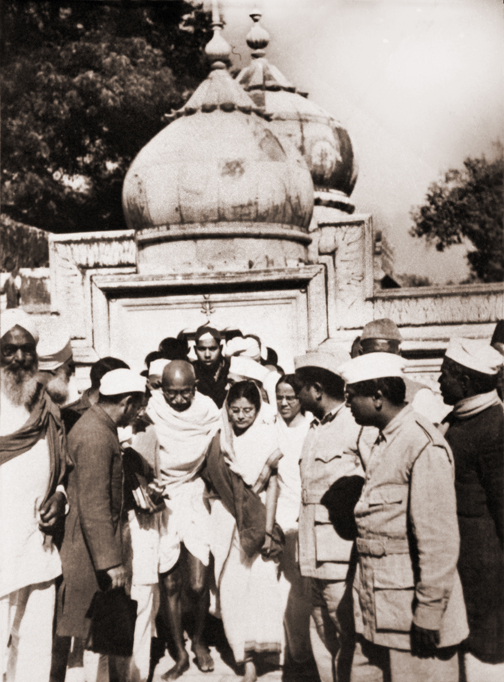
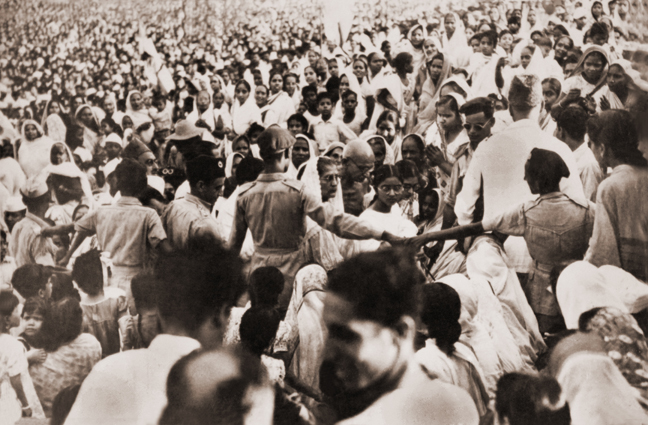
As the interminable caravans of refugees with their tales of woes crawled to their destinations, violence spread. When Gandhi arrived in Delhi early in September, he found it paralysed by communal tension. The Government, led by Nehru, had acted energetically and impartially Gandhi was not content with the peace imposed by the police and the military; he wanted violence to be purged from the hearts of Hindus and Muslims. It was an uphill task. Delhi had a number of refugee camps, some of which housed Hindus and Sikhs from West Pakistan, while others sheltered Muslims fleeing from Delhi for a passage across the border.
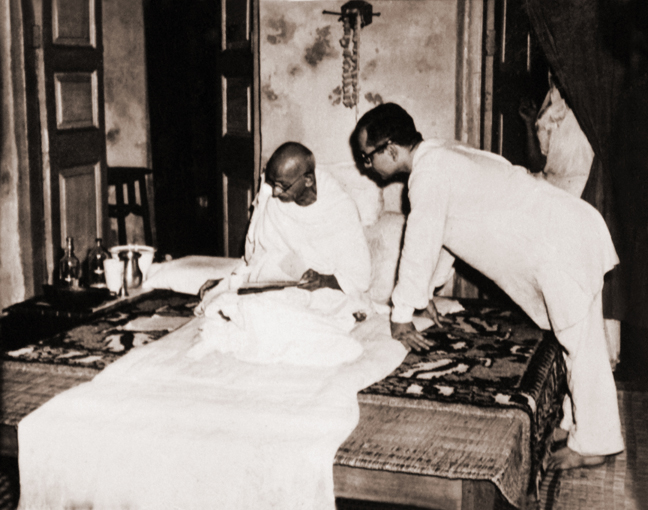
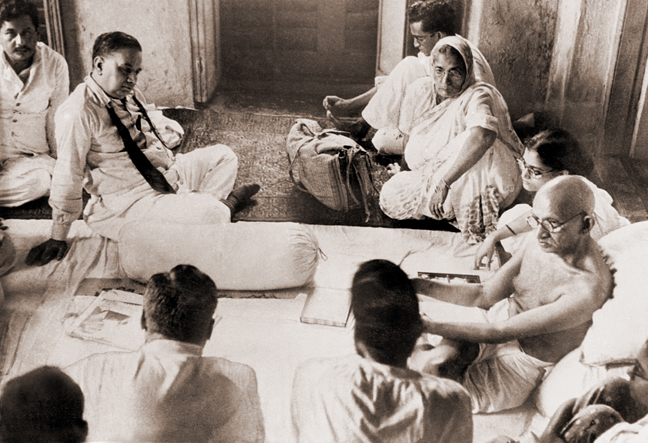
The tales of woe that Gandhi heard burned themselves into his soul, but he did not falter in his conviction that only non-violence and love could end this spiral of hate and violence. In his prayer speech every evening, he touched on this problem. He stressed the futility of retaliation. He wore himself out in an effect to re-educate the people; he heard grievances, suggested solutions, encouraged or admonished his numerous interviewers, visited refugee camps, remained in touch with local officials.
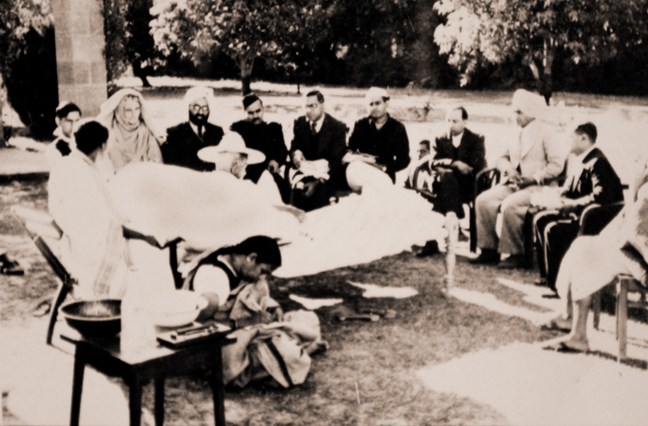
On January 13, 1948, he began a fast; “my greatest fast,” he wrote to Mirabehn, his English disciple. It was also to be his last. The fast was not to be broken until Delhi became peaceful. The fast had a refreshing impact upon Pakistan. In India there was an emotional shake-up. The fast compelled people to think afresh on the problem on the solution of which he had staked his life. On January 18, representatives of various communities and parties in Delhi signed a pledge in Gandhi’s presence that they would guarantee peace in Delhi.
After this fast, the tide of violence showed definite signs of ebbing. Gandhi felt free to make his plans for the future. He thought he should visit Pakistan to promote the process of reconciliation between the two countries and the two communities.
Even as he had grappled with communal violence, the real problems of India, the social and economic uplift of her people, had never been absent from his mind. Political freedom having become a fact Gandhi’s mind was switching more and more to constructive work, and to the refurbishing of his non-violent technique.