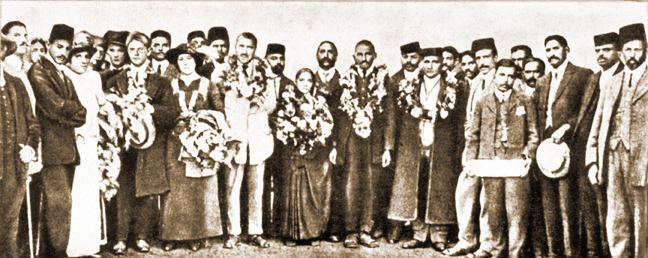
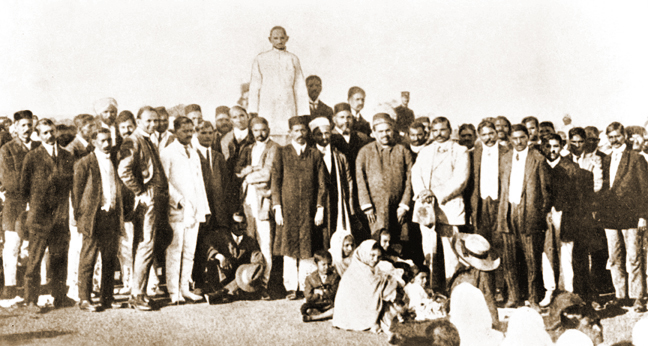
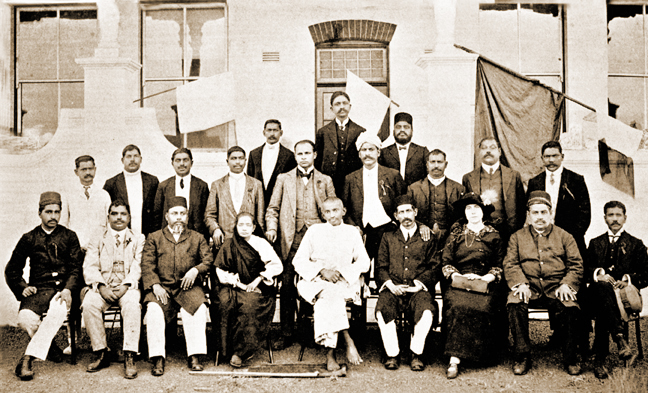
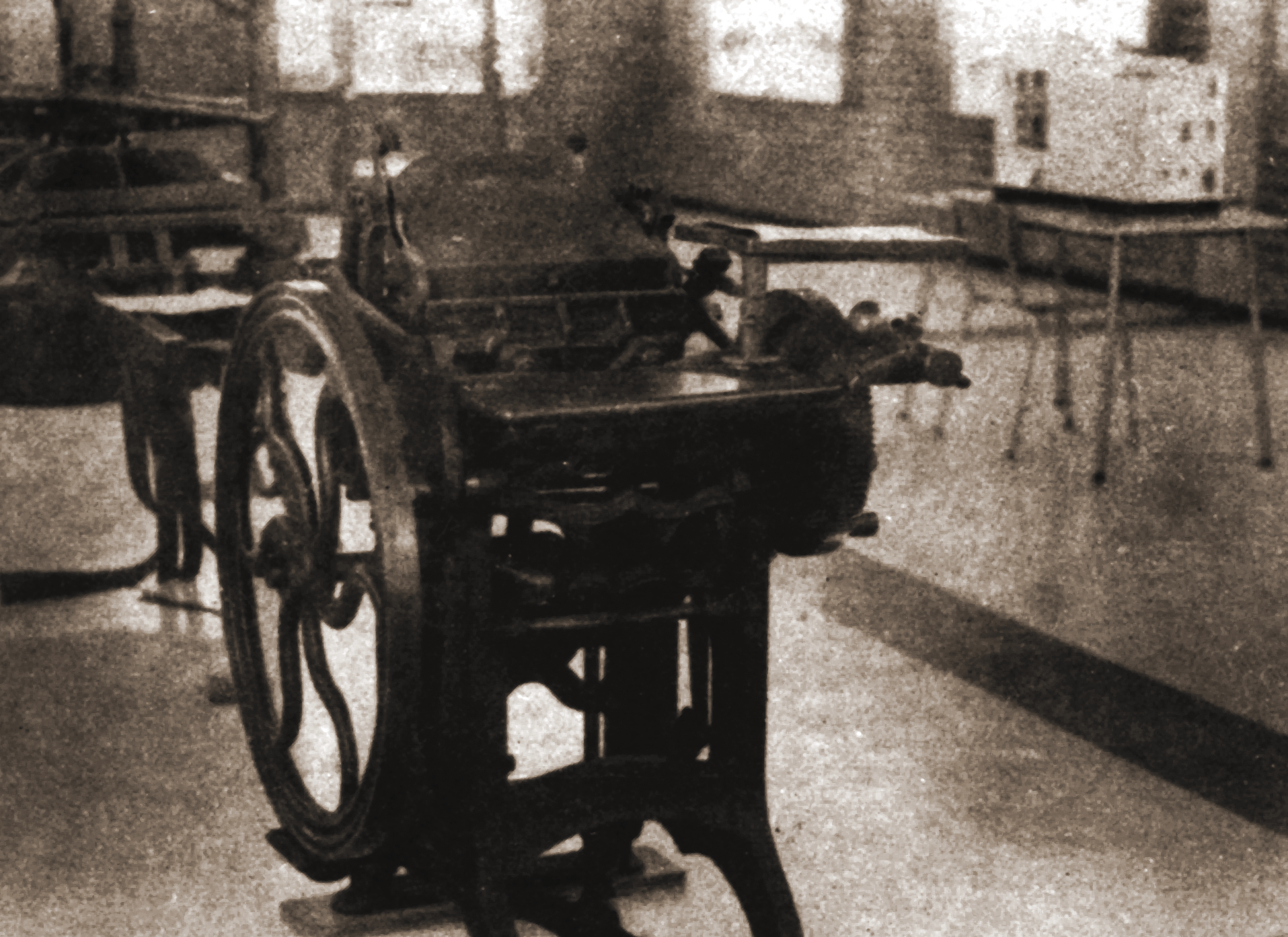
It was the passage of the Asiatic Registration Act in Transvaal in 1907 which convinced Gandhi that the method of protest, petition and prayer which he had sedulously pursued for nearly fourteen years had failed. It was at this juncture that he evolved a new technique, which came to be known as Passive Resistance; but as it ruled out both verbal and physical violence, it differed in important respects from the campaign waged on behalf of the suffragettes in England. The principles and techniques of Gandhi’s movement were to evolve gradually in the ensuing months and year; its author was a man for whom theory was the handmaid of action.
It is not possible here to give a detailed account of the Satyagraha struggle which Gandhi led in South Africa for seven years. It required great courage, patience and organizing ability to persuade the small Indian community to pit itself against the government, Gandhi had to reckon with the immense political and economic power wielded by the dominant European community, the stubbornness of the local government in South Africa, the reluctance of the British Colonial Office to antagonize the Union government in Pretoria, the apathy of the Government for India and the limited resources of the small Indian minority fighting for its survival on an alien soil. Gandhi himself worked under terrific pressure. In January 1908, he was arrested for breach of the registration law and imprisoned. The following month he was released after an understanding seemed to have been reached with the government. A few days later, he was beaten up and severely injured by a compatriot, who accused him of betraying the Indian cause.
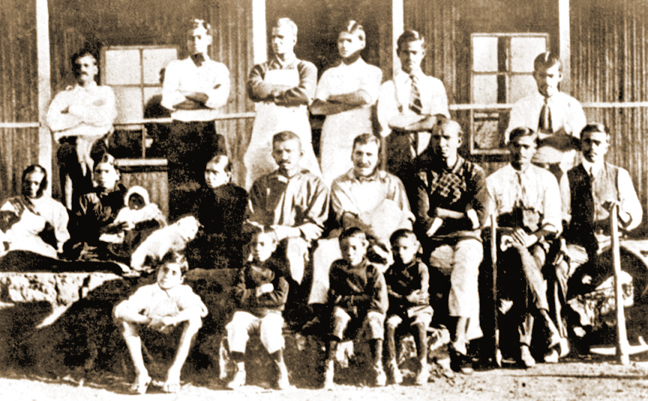
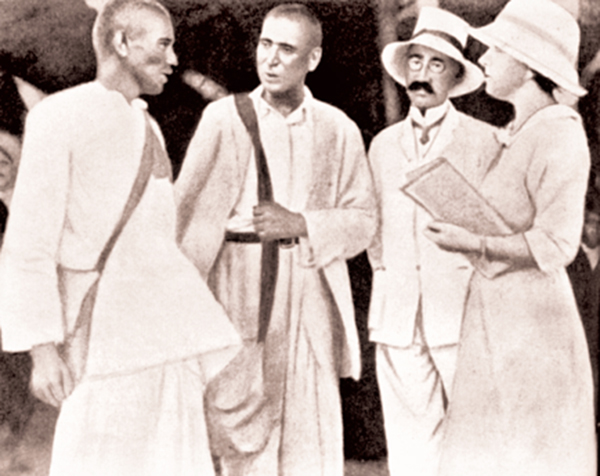
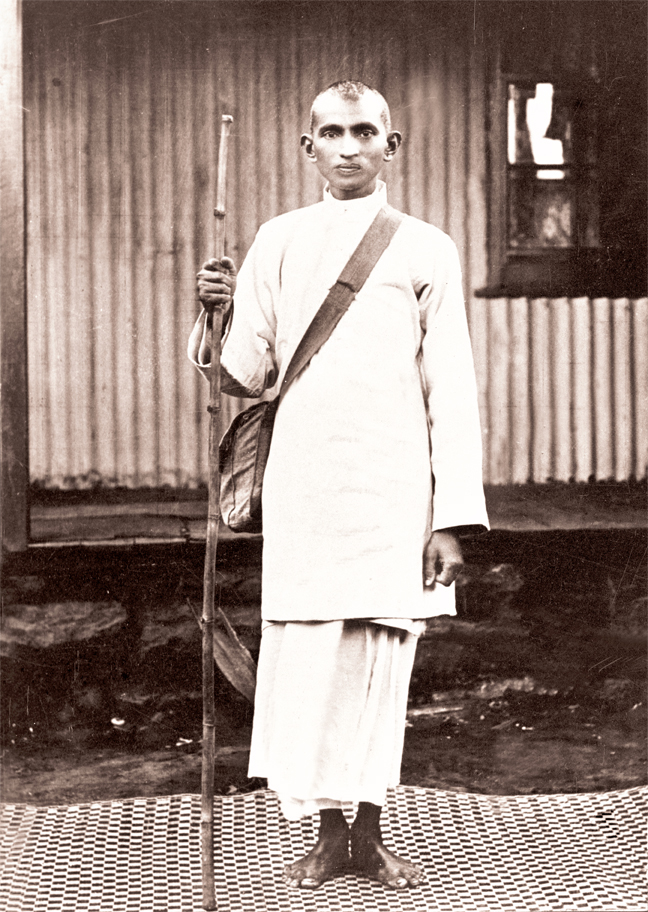
The truce with the Transvaal Government did not last long. The Satyagraha campaign had to be renewed. There were acts of defiance by the Indians and punitive measures by the authorities. Gandhi set up a small colony—Tolstoy Farm—at an 1100 acre site, 21 miles from Johannesburg where his colleagues in the Satyagraha struggle and their families could support a frugal istence—which was in fact harder than life in jail—by running a cooperative farm, “We had all become labourers,” Gandhi recalled later, “put on labourer’s dress, but in the European style, viz, workman’s trousers and shirts which were imitated from prisoner’s uniform”. Those who went to Johannesburg on private errands had to walk. Gandhi himself, though past forty and living only on fruits, did not think much of walking forty miles a day; he once did 55 miles without feeling any the worse for it. All residents of Tolstoy farm including children had their quota of manual labour. Those who had known this austere discipline could have little fear of gaol.
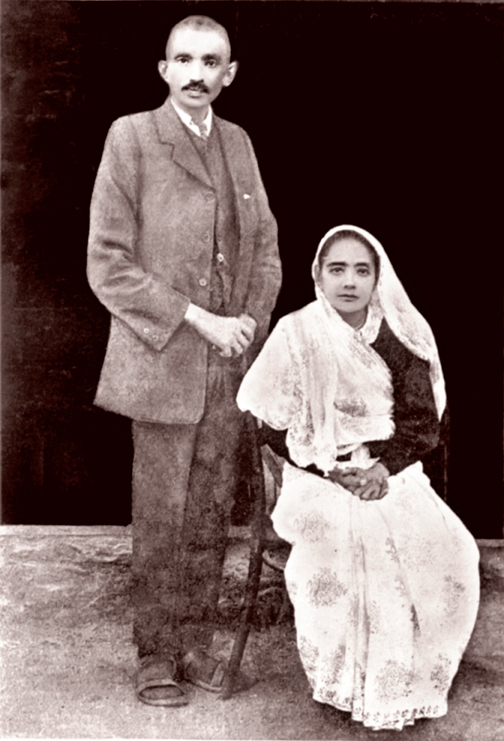
In 1912, Gokhale, one of the most eminent Indian politicians of the day, paid a visit to South Africa and discussed the problems of the Indian community with General Smuts and other members of the South African Government. He returned to India with the impression that the Asiatic Registration Act and the hated £3 tax on the ex-indentured labourers would be abolished. When this did not happen, and an additional provocation was given by a Supreme Court judgment invalidating marriages of non-Christians in South Africa, Gandhi launched what turned out to be the final phase of his struggle in South Africa. A party of eleven Indian women, including Gandhi’s wife Kasturba, courted imprisonment by crossing from Natal into Transvaal without a permit. The Indian labourers in the coal mines at New Castle went on a sympathetic strike. The mine-owners retaliated by cutting off water and electric connection to the areas where the labourers lived. Gandhi had no option but to take charge of the miners and their families, 2037 men, 127 women and 57 children. He decided to walk them from New Castle to Tolstoy Farm, but was arrested on the way. In Volksrust jail he was made to dig stones and sweep the compound. Later he was transferred to Pretoria jail and lodged in a dark cell ten feet long and seven feet wide, which was lit up at night only to check up on the prisoner. He was denied a bench, refused permission to walk in the cell and subjected to numberless pinpricks. Summoned for evidence in a case, he was marched to the court with hand-cuffs on his hands and manacles on his feet. Meanwhile, the Indian labourers had been put into special trains, and taken back to New Castle mines where they were forced to go underground by mounted military police.
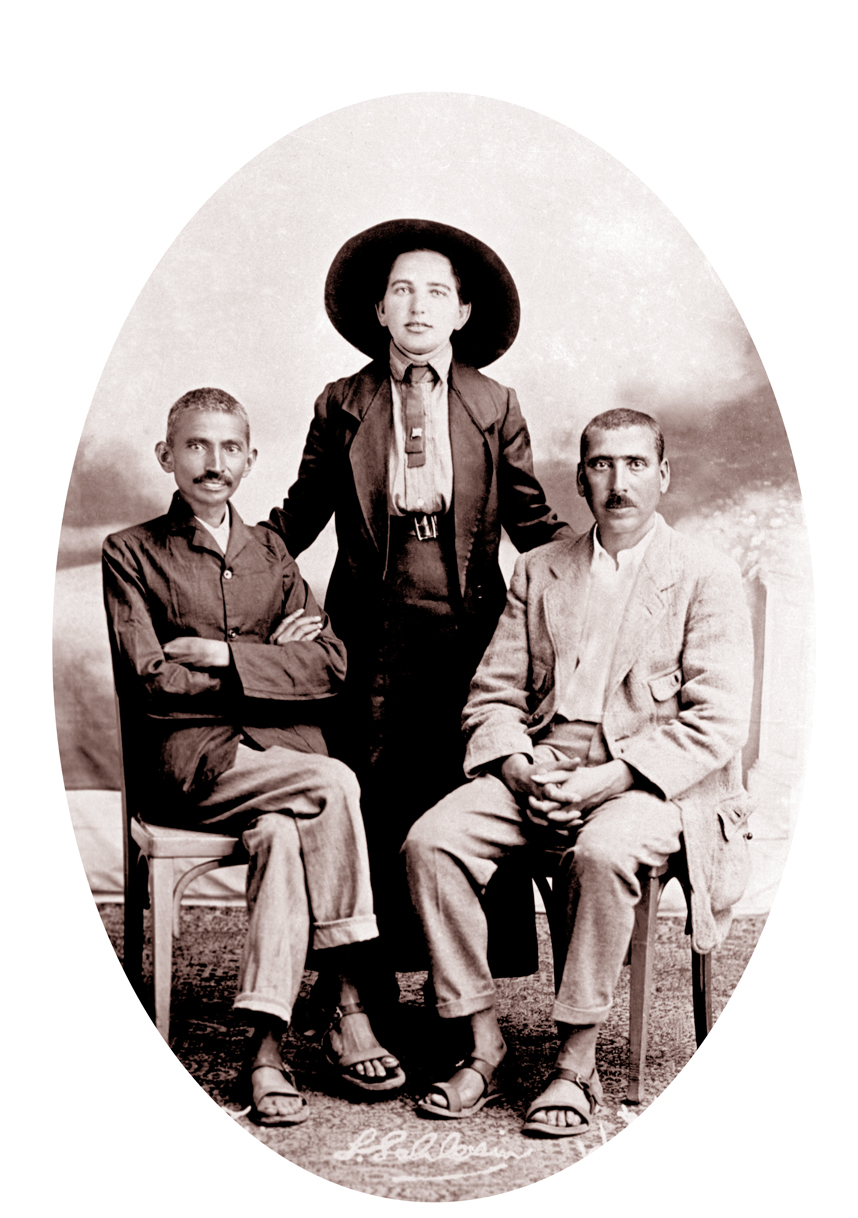
The ‘blood and iron’ policy of the South African Government stirred India deeply. Gokhale sent two earnest Christian youngmen. C.F. Andrews and Pearson, to assist Gandhi. Lord Hardinge, the Viceroy of India, courageously denounced the high-handed policies of the South African Government. Negotiations began between Gandhi and the South African Government under pressure from Delhi and London. Eventually an agreement was reached. Some of the major points on which the Satyagraha struggle had been waged were conceded to the Indians. The £3 tax on the ex-indentured labourers was abolished; marriages performed according to Indian rites were legalized, and a domicile certificate bearing the holder’s thumb-imprint was to be a sufficient evidence of the right to enter South Africa.
In 1939, a quarter of a century after the conclusion for the Satyagraha campaign, General Smuts, Gandhi’s chief antagonist in South Africa, recalled; “Gandhi himself received—what no doubt he desired—a short period of rest and quiet in jail. For him everything went according to plan. For me—the defender of law and order—there was the usual trying situation, the odium of carrying out a law which had no strong public support, and finally the discomfiture when the law had to be repealed. For him it was a successful coup.”
In jail, Gandhi had prepared a pair of sandals for General Smuts, who wrote that there was no hatred and personal ill-feeling, and when the fight was over, “there was the atmosphere in which decent peace would be concluded”.
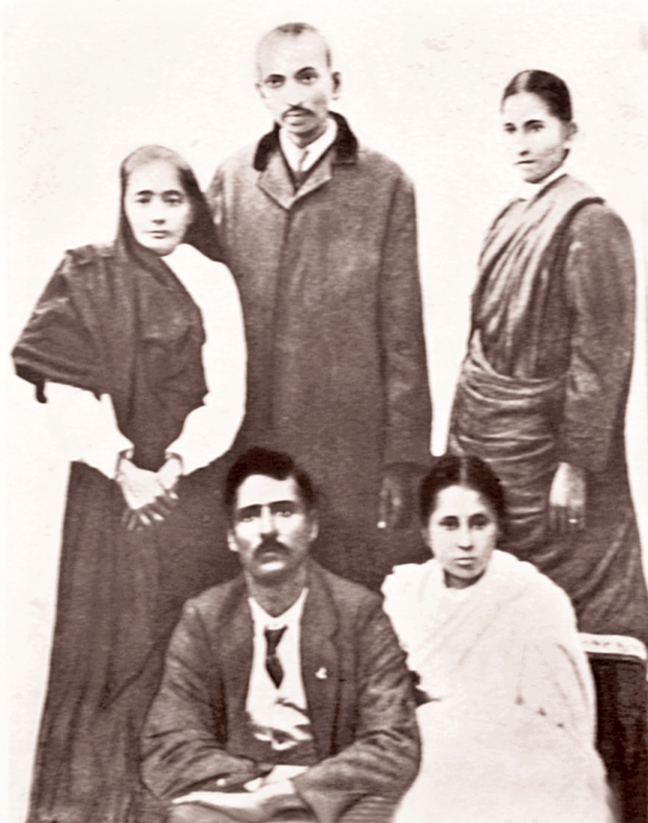
In 1914 Gandhi left South Africa. He had gone there as a junior counsel of a commercial firm for £105 a year; he had stayed on to command, and then voluntarily to give up a peak practice of £ 5000 a year. In Bombay as a young lawyer he had a nervous break-down while cross-examining witnesses in a petty civil suit; in South Africa, he had founded a new political organization with the sure touch of a seasoned politician. The hostility of the European politicians and officials and the helplessness of the Indian merchants and labourers had put him on his mettle. No glittering reward awaited him; the perils ranged from professional pinpricks to lynching. Nevertheless, it was a piece of good fortune that he began his professional and political career in South Africa. Dwarfed as he had felt by the great lawyers and leaders of India, it is unlikely that he would have developed much initiative in his homeland. When he founded the Natal Indian Congress at the age of twenty-five, he was writing on a tabula rasa: he could try out ideas which in an established political organization would have been laughed out of court.
What had truth and vows to do with politics? It was a question which often recurred in Indian politics, and if Gandhi was not confounded by it, it was because, far back in South Africa, he had observed and confirmed the connection. For a man who was no doctrinaire, and whose theory often lagged behind practice, it was a decided advantage that the scene of his early activities should have been one where he was unfettered by political precedents or professionals. Natal and Transvaal were no bigger than some of the smallest provinces of India. The struggle for Indian independence was conducted by Gandhi on a much larger scale and on much bigger issues, but there were not a few occasions when he derived inspiration from his experience in South Africa.
Not only his politics, but his personality took shape in South Africa. The most formative years of his life had been spent there. His interest in moral and religious questions dated back to his early childhood, but it was only in South Africa that he had an opportunity of studying them systematically. His Quaker friends in Pretoria failed in converting him to Christianity, but they whetted his innate appetite for religious studies. He delved deep into Christianity and other religions, including his own. In his first year in South Africa he read ‘quite eighty books’, most of them on religion. One of these was Tolstoy’s Kingdom of God is Within You. Tolstoy became his favourite author and in the coming years he read The Gospel in Brief, What is to Be Done, The Slavery of Our Times, How Shall We Escape?, Letters to a Hindoo and The First Step:An Essay on the Morals of Diet. Tolstoy’s bold idealism and fearless candour gripped him; his Christian anarchism dissipated the spell of institutional religion. Tolstoy’s emphasis on the necessity of an accord between moral principles and daily life confirmed his own strivings for self-improvement.
Few men read so little to so much profit as Gandhi did. A book was for Gandhi not a mere diversion for the hour, it was embodied experience which had to be accepted or rejected. Ruskin’s Unto The Last drove him with compelling urgency from the capital of Natal to the wilderness of Zululand to practice a life of voluntary poverty, and literally to live by the sweat of his brow. It was in Tolstoy’s books that we may seek one of the strongest influences on Gandhi. He was, of course, not given to indiscriminate imitation, but in Tolstoy he found a writer whose views elaborated his own inchoate beliefs. It was not only on the organized or covert violence of the modern state and the right of the citizen to civil disobedience that Gandhi found support in Tolstoy. There were innumerable subjects, ranging from modern civilization and industrialism to sex and schools, on which he tended to agree with Tolstoy’s analysis. There was an exchange of letters between the two which gives an impression of gratitude and reverence by the young Indian on the threshold of his career, and of delightful surprise by the aged Tolstoy. “And so your activity in Transvaal,” wrote Tolstoy to Gandhi, “as it seems to us, at the end of the world, is the most essential work, the most important of all that work now being done in the world, and in which not only the nations of the Christian, but of all the world will undoubtedly take part.”
While books on Christianity and Islam were easily available in South Africa, Gandhi had to send for books of Hinduism from India. He corresponded with his friend Raychandbhai, whose influence in favour of Hinduism was decisive at a time when Gandhi’s Quaker friends believed him to be on the way to baptism. The study of comparative religion, the browsing on theological works, the conversations and correspondence with the learned, brought Gandhi to the conclusion that true religion was more a matter of the heart than of the intellect, and that genuine beliefs were those which were literally lived.
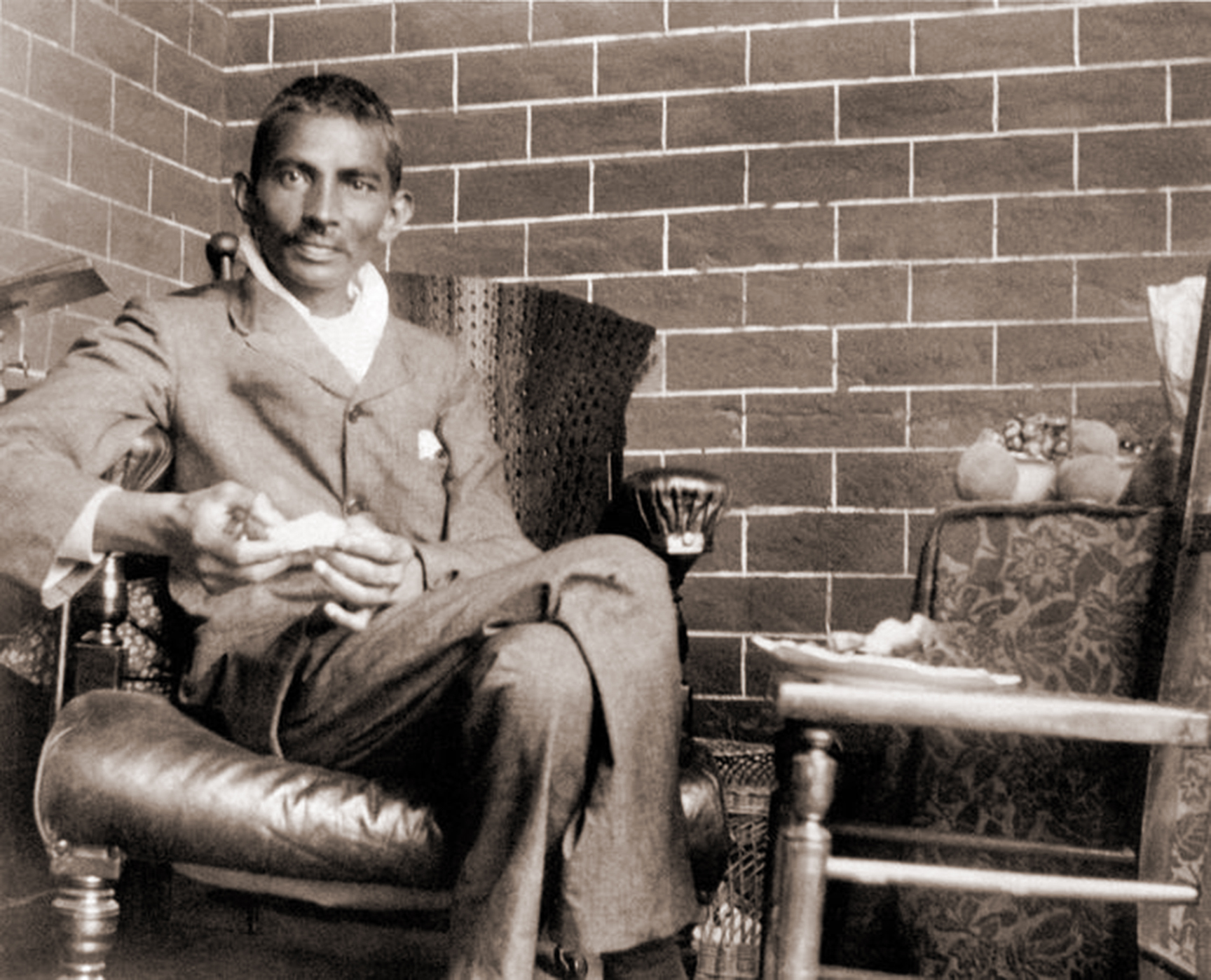
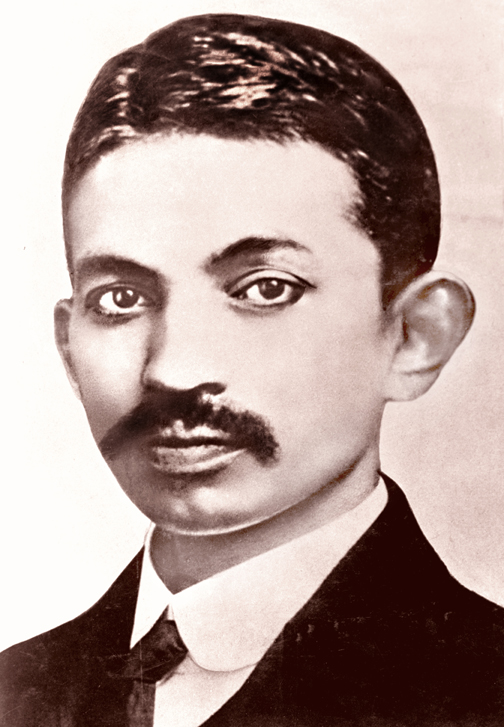
Gandhi’s style of life was also transformed during these years. From the Gita which he described as his “spiritual dictionary”, he had imbibed the ideal of “non-possession” which set him on the road to voluntary poverty, and of “selfless action” which equipped him with an extraordinary stamina for his public life. He trained himself as a dispenser in a charitable hospital in order to be able to attend on the ‘indentured’ labourers, the poorest Indians in South Africa. At Phoenix near Durban, and at Tolstoy Farm near Johannesburg, he set up little colonies, where he and those who shared his ideals, could find a haven from the heat and dust of towns, and men’s greed and hatred. A pen-portrait of Gandhi as he was in his late thirties has been left by his first biographer Rev. Joseph J. Doke of Johannesburg: “A small, lithe, spare figure stood before me, and a refined earnest face looked into mine. The skin was dark, the eyes dark, but the smile which lighted up the face, and that direct fearless glance simply took one’s heart by storm. I judged him to be some thirty-eight years of age, which proved correct. He spoke English perfectly and was evidently a man of culture . . . .There was a quite assured strength about him, a greatness of heart, a transparent honesty that attracted me at once to the Indian leader. Our Indian friend lives on a higher plane than most men do. His actions, like the actions of Mary of Bethany, are often courted eccentric, and not infrequently misunderstood. Those who do not know him think there is some unworthy motive behind, some Oriental ‘slimness’ to account for such profound unworldliness. But those who know him well are ashamed of themselves in his presence. Money I think has no charm for him. His compatriots . . . . . wonder at him, grow angry at his strange unselfishness, and love him with the love of pride and trust. He is one of those outstanding characters with whom to walk is a liberal education . . . whom to know is to love.”